
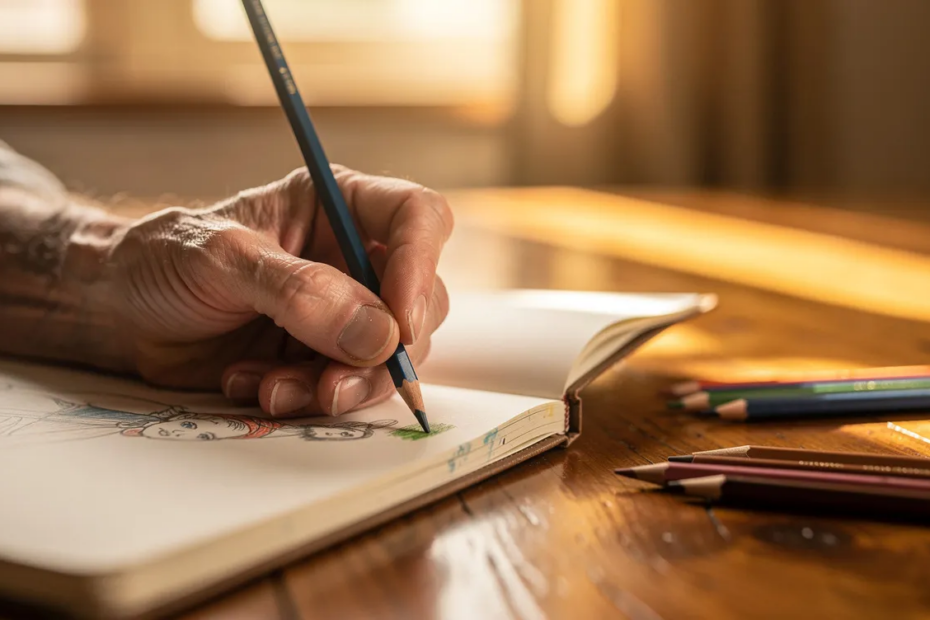
I worked the Halifax harbour ferries for thirty-one years, mostly lines and ropes and calling out the stops. I never drew anything but the odd map on a napkin. When I retired at 65, the quiet in the house was louder than I expected, and my wife gave me a tin of colored pencils and a pad of paper that Christmas and said, “Try it for a month.” That was 2016. I have drawn at the dining room table most mornings since.
My drawings are not going on any gallery wall. But I have a stack of sketchbooks, a lot of fond mornings, and some hard-won opinions about what makes a good pencil for somebody starting late. This article is my honest guide to choosing pencils that suit older hands, smaller budgets, and the kind of careful pleasure that comes from colouring a piece of fruit or a harbour scene before the tea goes cold.
Why “Good Colored Pencils” Matter When You Start Drawing After 60
Let me give you the short answer up front, in my own words. A good colored pencil has a soft, richly pigmented core that lays down colour smoothly, does not snap every time you sharpen it, and carries a lightfast rating if you ever plan to hang your work on a wall. For late starters like me it also needs to be comfortable to hold, forgiving when you press too hard or layer clumsily, and not so expensive that you wince every time you sharpen it down.
Now for a little bit of the “why.”
A colored pencil is pigment held together with a binder, wrapped in wood. The pigment gives the colour. The binder holds the pigment together and makes it stick to the paper. The wood protects the core and, ideally, sharpens cleanly without splintering. That is really all there is to the construction. The Wikipedia article on colored pencils is a fine plain-language reference if you want to understand how the pencils are built and what types exist.
Colored pencils generally fall into two main categories based on their binder: wax based and oil based. Understanding the differences between wax and oil-based pencils is key when you are choosing pencils for the first time. Wax based pencils use a softer binder that offers a soft laydown and blends effortlessly with light pressure. Oil based pencils use a firmer binder that holds a sharp point longer and gives you more control over fine details. There are also watercolor pencils, which dissolve in water and let you brush over strokes for a wash effect, but I am setting those aside for now because dry pencils are simpler and that is where most of us start.
Colored pencils’ performance is influenced by their core type and formulation. A pencil with more pigment and less filler will lay down richer colour. A pencil stuffed with cheap filler will look pale and chalky no matter how hard you press. That difference is the heart of why some pencils feel like a treat and others feel like homework.
My pick for a first set is wax based colored pencils, because they are easier to find, the colours appear with a lighter touch, and the pencils blend without fuss. An oil based set makes a lovely second purchase for crisp lines and fine details once you know what you enjoy drawing.
I am a hobbyist, not an art teacher. Everything here comes from years of daily use by a retired deckhand with stiff hands and a small budget. I have wasted money on a couple of sets so you do not have to. What follows is a simple, practical ranking that answers “what should I actually buy first,” based on what I used myself from 2017 to 2026, what friends my age enjoy, and what beginner forums keep recommending.
If you are new here and want to know where I am coming from and what this blog is about, the Welcome Aboard page will fill you in.
How I Chose The Best Colored Pencils For Late Starter Artists
This is not a lab test. It is careful, real-world use by someone over 70 who draws most mornings, focused on full pencil sets sold between 2024 and 2026 rather than rare vintage tins or limited editions. I paid attention to five things.
Comfort And Ease Of Use
Soft, creamy soft cores help people with arthritis or stiff fingers apply colour without pressing hard. That matters more than you might think. Pressing hard on a pencil with weak pigment wears out both the paper and your hand, because you have to push and push to get any colour at all. A pencil with more pigment rewards a light touch.
I also paid attention to barrel shape and thickness. Hexagonal barrels are the most common and they sit in my hand well enough, but some people prefer round or triangular shaped barrels that stop the pencil from rolling off the table and feel more natural in a tired grip. Softer pencils with thick barrels are generally kinder for longer sessions.
Sharpening matters too. I use a small, sharp, handheld metal-blade sharpener and I replace it when it starts tearing the wood. A dull blade will crack a soft core inside the barrel and you will think you bought bad pencils when really you just need a fresh sharpener. That little detail has saved me a lot of frustration over the years.
Colour Range And Blending
A good beginner set needs enough of a range of colors to draw fruit, skies, people and flowers without constant mixing. More colors in a set improve workflow and creativity, because you spend less time trying to force two pencils to make a third colour and more time actually drawing. That said, 24 colours is plenty to start. You do not need neon colors or every subtle variation of teal right away.
Smooth dry layering matters for people who do not want to bother with solvents or mixed media techniques. When pencils blend well, you can lay analogous colors side by side, yellow into orange into red, and they meld on the paper without mud. Understanding a basic color wheel helps here, but honestly you learn most of it just by layering one colour over another and seeing what happens.
Strong light makes even modest sets look better. I draw by the dining room window in the morning and my colour choices are far more accurate there than under a yellow lamp. Cool tones especially look muddy under warm bulbs. If you can, sit near a window.
Durability, Breakage And Paper Friendliness
Frequent breakage wastes money and patience, and that is what disqualifies some very cheap sets for older beginners. Over the years I watched for wax bloom, which is a cloudy white haze that appears on heavily layered dark areas of wax based colored pencils. New users sometimes mistake it for damage, but it is just wax rising to the surface and you can gently wipe it away. I also watched for crumbling and scratchiness, and I judged everything on common beginner papers: sketchbook paper, printer paper, and Bristol board. I did not test on rare museum boards because none of us are using those at the kitchen table.
Lightfastness is crucial for artworks intended for display. If you plan to frame a colored pencil drawing and hang it in a bright room, you want pencils with tested lightfast ratings. If you only draw in sketchbooks for your own pleasure, lightfastness matters less.
Here is my store scribble test for readers who can try open stock pencils before buying a full set. Pick up a pencil you might use often. Press lightly, then firmly, on a scrap of paper. Hold the page up to the light and look for white specks, which mean poor pigment coverage. Then layer yellow under blue and see if you get a clean green without waxy weirdness. Finally, give the point a gentle sharpen and check whether the core splits or frays. That test takes about a minute and tells you a surprising amount.
Price, Availability And Value
Most retirees are on a budget, so I looked for sets that feel special without costing like a cruise, and that are widely available in North America in 2024 to 2026 so readers can actually find them. I favoured sets you can buy in shops or order online without hunting through specialty importers.
Colored pencils can vary in quality based on pigment quality and blendability, and the industry loosely sorts them into “student,” “hobby,” and “professional” levels. The difference comes down mostly to pigment. Cheaper pencils use more filler and less pigment, so colours look pale and need many layers to build up. Artist grade pencils use more pigment, which means richer colour from fewer strokes. Beginners often benefit from budget-friendly colored pencils that offer good performance, which usually means a decent hobby-grade set rather than the cheapest thing on the shelf.
For reference, a 72-colour set of Prismacolor Premier works out to roughly a dollar or so per pencil. A 36-colour tin of Polychromos pencils runs closer to two dollars per pencil. Caran d’Ache Luminance in a 40-colour set can reach over four dollars per pencil. Expensive pencils are not always necessary, but the jump from student grade to a solid mid-range set is worth every cent.
Who Each Set Suits Best
I ranked sets not just on quality but on how well they fit different over-60 situations. A grandparent colouring with kids needs something different from a retired engineer who likes precise detail or someone with limited grip strength who just wants colour to appear without a fight. Each recommendation below includes a “Best for” section that spells this out simply.
The 7 Good Colored Pencil Sets I Recommend For Older Beginners
After trimming a long list that included other brands like Lyra Rembrandt Polycolor, Derwent Artists, Derwent Coloursoft (which is easier to blend than many other artist pencils), Derwent Chromaflow (which bridges the gap between student-grade and artist-grade performance nicely), Chameleon Color Tones (which blend well and have a buttery texture), and even the Faber Castell Black Edition, I ended up with seven sets that feel meaningfully different and worth recommending. I start with the friendliest and most affordable and move toward the pricier “treat yourself” tins.
The seven: Crayola Colored Pencils, Faber-Castell Goldfaber, Prismacolor Premier Soft Core, Faber-Castell Polychromos, Derwent Lightfast, Staedtler Ergosoft, and Caran d’Ache Luminance.
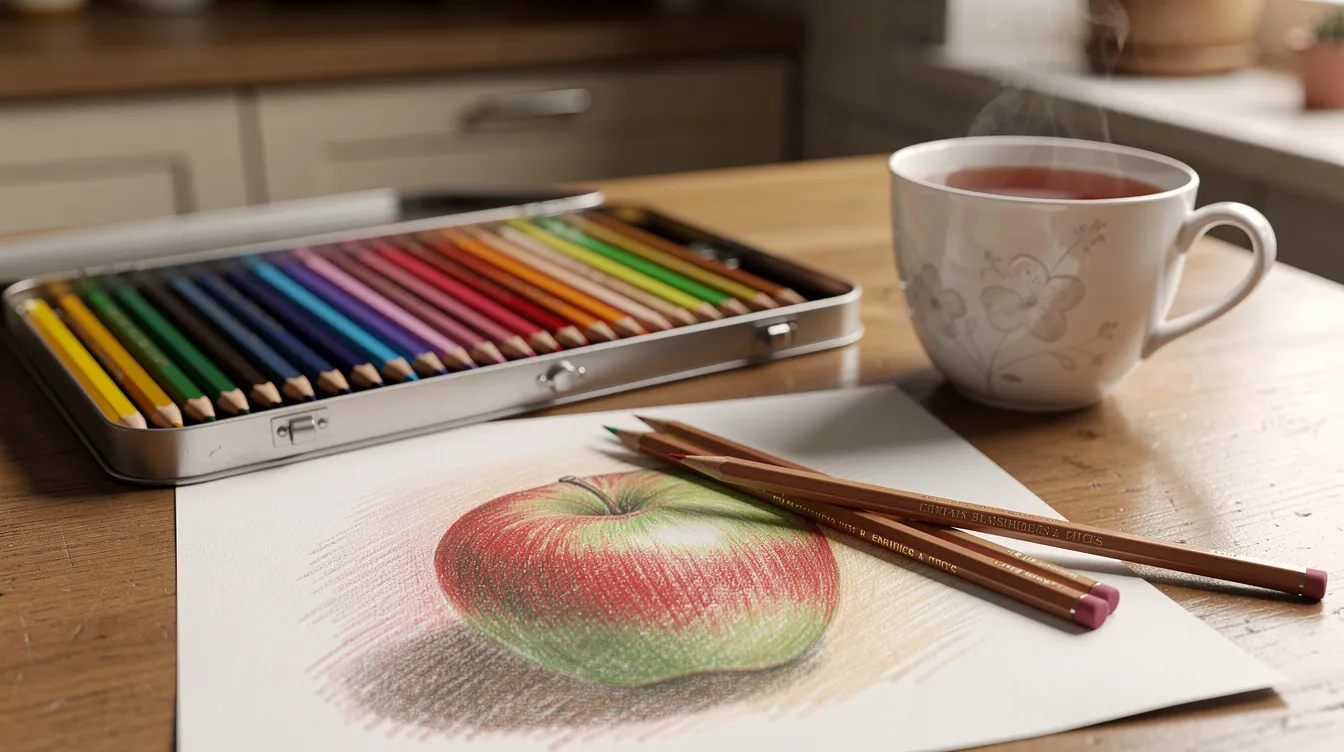
1. Crayola Colored Pencils
I still keep a 50-colour Crayola tin on the sideboard even after buying fancier sets. When a grandchild visits or when I just want to scribble without thinking, I reach for the Crayola box. There is no guilt in breaking one, no anxiety about wasting a three-dollar pencil on a doodle of a cat.
Why It Stands Out
The price is tiny. You can find Crayola colored pencils in supermarkets, pharmacies, big box stores, and even in small Canadian towns like mine. They are so familiar to anyone who ever coloured with kids or grandkids that picking one up lowers the fear of starting. On better quality paper, they actually perform surprisingly well for what they cost.
Best For
Absolute beginners over 60, people sharing a box with grandchildren, retirement-home activity rooms, adult coloring books, and anyone who is not ready to spend much until they know they enjoy drawing.
Key Strengths
-
Very affordable price sets (24, 36, 50, 100 colours), so you can start for the cost of a nice lunch.
-
Harder core holds a sharp point for colouring books and simple sketches, and survives clumsy sharpening and young children without shattering.
Possible Limitations
-
Colours are less intense and need more effort to layer than artist brands, especially on cheap paper. The wax can feel scratchy when you try to cover large smooth areas like skies.
-
There are no lightfast ratings on these. The Wikipedia entry on lightfastness explains why that matters: pigments without tested lightfastness may fade in bright rooms over months or years. That only matters if you plan to frame a drawing and hang it where sunlight reaches it. For sketchbooks, it is a non-issue.
2. Faber-Castell Goldfaber Colored Pencils
The Goldfaber set became my first “grown up” pencils in 2018. The tin lived on the dining room table for two solid years. It was the first time I noticed the difference a decent pencil makes, and I still recommend it as the best first upgrade for anyone who has outgrown school-grade art supplies.
Why It Stands Out
Faber Castell built the Goldfaber as a clear step up from school pencils without the shock of premium prices. The colour intensity is noticeably richer than Crayola, the cores glide more smoothly, and they look lovely on both white cartridge paper and toned paper.
Best For
Retirees who know they enjoy colouring and want nicer supplies, and adult beginners drawing small still lifes or landscapes who like some detail but do not want hard pencils that fight back.
Key Strengths
-
Soft but not mushy core (roughly 3.3 mm) that layers and glides well, in barrels that sharpen cleanly in handheld sharpeners.
-
Good middle-sized pencil sets (24, 36, 48, 72) with plenty of greys and browns for everyday subjects, in a tin that feels like a treat without being intimidating.
Possible Limitations
-
No full official lightfast ratings, so not ideal for selling originals, and the softest colours can show wax bloom in very heavy light layers, which puzzles new users who see that white haze for the first time.
-
Not as sharp-pointed or precise as oil based professional pencils. If you want to draw individual pine needles, you will want something firmer later on.
3. Prismacolor Premier Soft Core Colored Pencils
I bought a 72-set of Prismacolor Premier colored pencils in 2019 and spent a whole winter happily layering fruit bowls and boat drawings. Many hobby artists swear by these, and I understand why. The colour is rich, the feel is luxurious, and they reward a gentle hand.
Why It Stands Out
Prismacolor Premier is usually the first “artist” brand people hear about. Prismacolor Premier pencils are popular for their soft, buttery core and for laying down vibrant color with very little pressure. The color range runs up to 150 pencils, so you never run out of greens, skin tones, or those subtle in-between shades that make a portrait come alive. Prismacolor pencils also work on other surfaces beyond white paper, including dark paper and black paper, where the vivid color really glows.
Best For
Retirees who draw several times a week, lovers of smooth shading, portraits, florals, and intense colour. They suit folks willing to be gentle with sharpening and storage, because the soft cores demand a bit of care.
Key Strengths
-
Very soft, buttery core that blends with almost no pressure, kind to arthritic hands, with excellent colour saturation for deep reds, dark blues, and glowing sunsets. The color intensity and color vibrancy are hard to beat at this price.
-
Sold in sets and open stock, so you can replace favourite colours one by one. These pencils blend beautifully on many papers.
Possible Limitations
-
Cores can be fragile. Prismacolor Premier pencils break repeatedly in cheap or dull sharpeners, and the soft core wears down quickly. A quality sharpener is essential.
-
Wax bloom appears in heavy dark areas after a few days. Lightfastness testing is in-house only, so many colours will fade in strong sunlight. If you want to hang your work, check the lightfastness of each colour before you commit to a finished piece.
4. Faber-Castell Polychromos Colored Pencils
I bought a 36-set of Faber Castell Polychromos in 2021 and learned to enjoy the slightly firmer feel and the fine detail they allow. My harbour drawings improved the moment I could hold a sharp line for boat rigging and mast ropes.
Why It Stands Out
Faber-Castell Polychromos are oil-based and great for fine details. The oil based core holds a sharp point far longer than any wax pencil I have used, and it resists breaking even when I drop a pencil on the kitchen floor. Faber-Castell Polychromos pencils have a 3-star lightfast rating for 102 colors out of the full range, which means almost the entire palette is rated to last. That matters if you frame work and hang it where light reaches it.
Best For
Patient drawers who like tiny fine details, retired engineers and knitters who enjoy neat lines, and hobbyists stepping toward archival work. Polychromos pencils pair well with softer pencils like Prismacolor or Goldfaber for a two-pencil approach: use the firm one for edges and detail, the soft one for shading and blending large areas.
Key Strengths
-
Harder, precise core (about 3.8 mm) that sharpens to a needle point and stays sharp, with excellent lightfastness across most of the 120-colour range. Faber-Castell Polychromos pencils are favored for fine details among professional artists and serious hobbyists alike.
-
Smooth layering without wax bloom and good control over subtle colour shifts, in strong cedar barrels that rarely split even after a drop. The professional quality is evident in every pencil.
Possible Limitations
-
These professional pencils need more pressure and patience to build rich colour, which may tire very weak hands. The drier feel may disappoint anyone expecting Prismacolor creaminess. Oil based pencils like these deliver color vibrancy through layering, not through a single heavy stroke.
-
More expensive than student sets, and a full 120-colour tin is a serious investment. But you can buy them as singles and build slowly, which is what I did.
5. Derwent Lightfast Colored Pencils
A friend lent me her 48-set in 2023, and I was surprised by the buttery feel combined with the confidence that every single colour is rated to last. These lightfast pencils sit in a sweet spot I had not expected.
Why It Stands Out
Derwent Lightfast pencils are rated 100% lightfast for up to 100 years under museum conditions. That removes all guesswork if you want to frame work for your children and grandchildren and know the colours will still be there decades from now. They blend as softly as the most luxurious colored pencil brands while keeping decent point strength.
Best For
Hobbyists who occasionally sell or gift originals, portrait lovers, and anyone who wants to “buy once, cry once” on a top-end set. Good for people who want soft blending and confidence that vibrant colors will not vanish over the years.
Key Strengths
-
Very creamy cores that layer without grit or scratchiness, with official lightfast guarantees aimed at museum-level longevity. Derwent Lightfast pencils last up to 100 years under museum conditions, which is a claim very few other pencils can match.
-
Growing range with good neutrals and skin tones, and sturdy barrels with few broken cores straight out of the tin. A very high quality set overall.
Possible Limitations
-
High price per pencil, often close to Caran d’Ache Luminance pricing in Canada and the US. Smaller sets feel limited, and you only get the full browns, greys, and cool tones in larger tins.
-
Not necessary if you only sketch in a notebook and never display your work. By contrast, Derwent Studio pencils are great for fine details due to their strong core but have only 16 lightfast colors out of 72, so they serve a different purpose entirely.
6. Staedtler Ergosoft Colored Pencils
I first saw these triangular shaped pencils being used in a seniors’ centre in Halifax in 2022. The woman using them had hands far stiffer than mine and she was colouring happily without any struggle. I bought a 24-set and kept it beside my armchair for casual colouring in the evenings.
Why It Stands Out
The soft-touch barrel and triangular shape help with grip, which makes Staedtler colored pencils a standout for anyone with shaky or arthritic hands. The cheerful colours suit colouring books and simple drawings well, and the pencils do not roll off the table, which sounds like a small thing until it is not.
Best For
People with grip issues or tremor, grandparents sharing with school-age kids, and anyone who likes a non-slippery pencil. Good for casual hobby drawing rather than serious archival work. The right colored pencils depend on whether you prioritize ease of blending or detail, and these lean firmly toward comfort and ease.
Key Strengths
-
Strong, break-resistant core that survives heavy use and enthusiastic grandchildren.
-
Rubbery triangular barrel easier to hold than glossy round ones, handy flip-top packaging that becomes a little stand on the table, and an affordable price with sets running up to 36 or 48 colours.
Possible Limitations
-
Modest color range that misses subtle hues for advanced portrait work, and no lightfast information, so these are better for sketchbooks than sunny walls.
-
Not as blendable as softer artist grade pencils. For serious blending, you would eventually want new pencils from a creamier line.
7. Caran d’Ache Luminance 6901 Colored Pencils
I bought a small 20-colour portrait set in 2024 as a birthday present to myself. It is my “special occasion” tin. I only use it for finished pieces I plan to keep or give away, and every time I open it I feel a small thrill, which is exactly the right feeling for a pencil that costs what these cost.
Why It Stands Out
The feel is luxurious. Thick, creamy cores, beautiful wooden barrels, and rich pigments that practically paint themselves onto the page. Caran d’Ache Luminance pencils are 100% lightfast and highly pigmented, with 81 out of 100 colours rated at the top ASTM LFI grade. Like Derwent Lightfast, the entire range is built to last, but Luminance adds a softness and opacity that few other pencils match.
Best For
Retirees who have fallen head over heels for drawing and want one top-tier set, especially for portraits and still lifes, and who draw slower, more finished pieces rather than quick daily sketches. These are the best quality pencils I have used, and they feel like it.
Key Strengths
-
Extremely soft, opaque cores that cover tinted and black paper with ease. White pencils in this range actually show up on dark paper, which is something cheaper pencils often fail at.
-
Superb lightfastness for heirloom pieces, a beautiful selection of skin tones and natural colours, and available open stock so you can build a set slowly as your personal preference in colours becomes clear.
Possible Limitations
-
Among the most expensive colored pencils available. A full set is a serious luxury purchase.
-
The very soft cores wear down quickly, so you sharpen more often and go through pencils faster. That adds up over many layers and many mornings.
-
Overkill if you mostly colour puzzle books while watching television. A great pencil, to be sure, but only if you use it for work that deserves it.
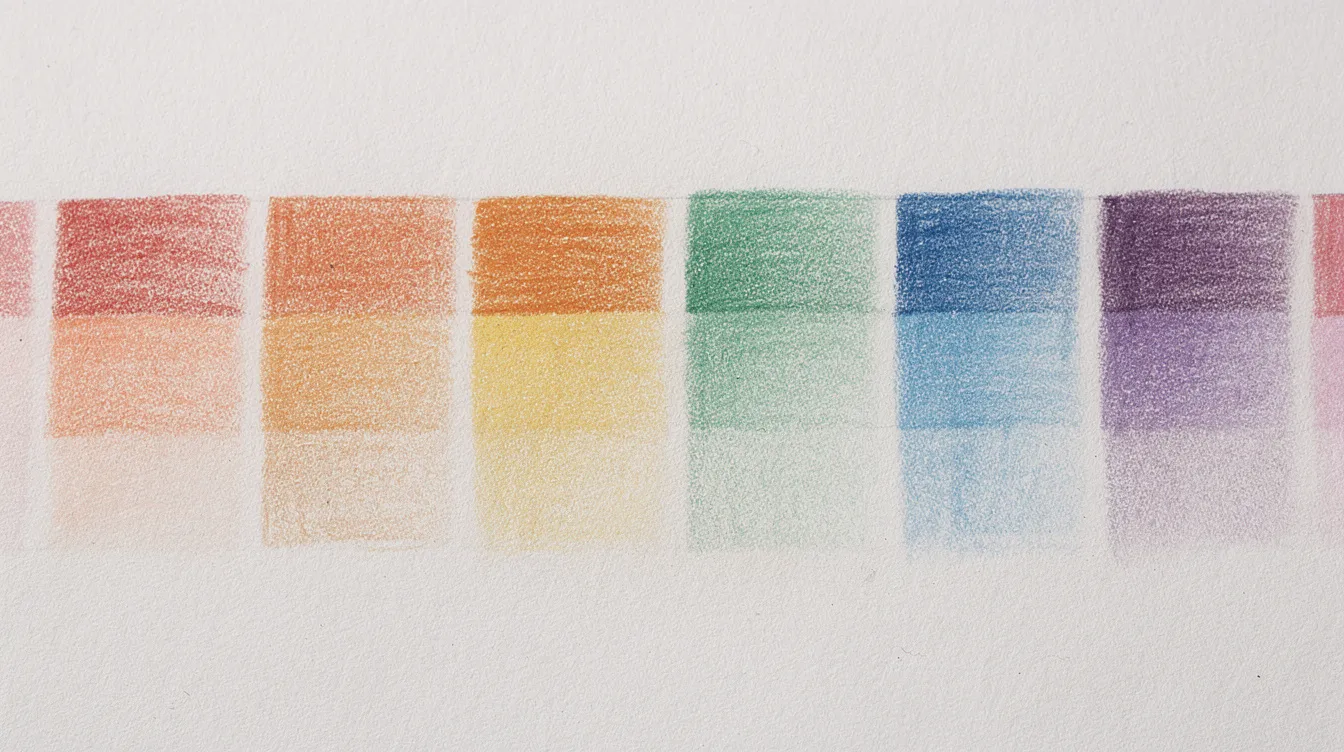
Quick Comparison Of The Best Colored Pencils For Older Beginners
This section helps readers match themselves to a set without rereading everything above.
At-A-Glance Recommendations
Budget and casual use:
-
Crayola Colored Pencils: best for testing the waters on a very small budget or colouring with grandchildren.
-
Faber-Castell Goldfaber: best all-round first “nice” set for retirees who have caught the drawing bug.
-
Staedtler Ergosoft: best for an easy-grip pencil for casual drawing with stiff hands.
Committed hobbyist and display work:
-
Prismacolor Premier Soft Core: best for soft, blended, painterly colour and vivid color.
-
Faber-Castell Polychromos: best for fine detail and careful, patient sketchers.
-
Derwent Lightfast: best for archival quality with creamy blending.
-
Caran d’Ache Luminance 6901: best for a once-in-a-lifetime “treat” set for serious late-life art.
How To Choose The Right Colored Pencils For You
There is no single right choice, only what fits your hands, your eyes, and your budget right now. Start simple and upgrade later rather than waiting for perfect supplies that never arrive. A high quality pencil in a modest set will teach you more than a 120-piece tin that intimidates you into leaving it closed.
Choose Based On Your Budget And Commitment
Three rough budget levels, with examples:
|
Budget |
Sets to Consider |
Best If You… |
|---|---|---|
|
Under $20 |
Crayola (24 or 50), small Staedtler Ergosoft set |
Draw once a week or less, colour with grandkids, just want to try |
|
$20 to $70 |
Faber-Castell Goldfaber 36 or 48, medium Prismacolor Premier, Polychromos starter 12 or 24 |
Draw a few mornings a week and enjoy it |
|
$70 and up |
Large Polychromos, Derwent Lightfast 48, Luminance portrait set |
Draw most days, frame work, give originals as gifts |
Match your spending to your habits. Once-a-month colouring does not need a two-hundred-dollar tin.
Here is my practical path. Buy a 24-set. Work through it. Note which colours you run low on first. Then buy those as single pencils from a line that sells them individually, rather than buying another full set. Skip 120-piece sets for a long while, because a beginner does not yet know which of those close-neighbour colours they will actually use. Move to Prismacolor or Polychromos after six months if still keen, and treat Lightfast or Luminance as a special upgrade when you are ready.
Choose Based On Your Hands And Drawing Style
People with arthritis or weak grip usually prefer softer pencils that give colour with light pressure. Prismacolor, Goldfaber, Derwent Lightfast, and Luminance all reward a gentle touch. Triangular or rubberised barrels, like the Staedtler Ergosoft, help if pencils tend to slip from your fingers.
Detail-oriented sketchers may prefer firmer cores that hold a thin point. Polychromos is the obvious choice among these seven, though even Crayola holds a decent point for simple line work. A lot of choosing pencils comes down to personal preference, and that preference usually becomes clear after a few weeks of regular use.
Choosing quality paper enhances colored pencil performance more than most beginners expect. You do not need anything fancy, but cheap printer paper behaves poorly with soft pencils because it has no “tooth” to grab the pigment, and very smooth paper stalls layering. A plain medium-weight drawing paper with a light texture is a good start. That is your colored pencil paper sorted. For readers who want my full list of picks for paper, sharpeners, and erasers, the beginner art supplies list covers it all.
Choose Based On Paper, Space And Storage
Huge 120-pencil tins can be awkward on a small kitchen table, which is the workspace most of us actually have. Smaller sets or pencil rolls may suit better. Keep one simple “everyday” set handy and store the fancy set safely so it does not get knocked to the floor and crack every core inside.
A graphite pencils set, a soft eraser, and good light round out a simple setup. You do not need a studio. A corner of the dining room table and a window are plenty.
Which Colored Pencil Set Is Best For You Right Now?
Rather than a vague summary, here is direct guidance.
-
Choose Crayola Colored Pencils if you are dipping a toe in or colour mostly with grandchildren. Choose Faber-Castell Goldfaber if you want one friendly, good-quality set for sketchbooks, still lifes, and landscapes without spending a fortune.
-
Choose Prismacolor Premier Soft Core for soft shading and bright colour. Choose Faber-Castell Polychromos for detail and clean edges. Choose Staedtler Ergosoft if your hands slip or cramp and you want a comfortable, forgiving pencil.
-
Choose Derwent Lightfast if you frame work or give drawings as gifts and care about long-term colour stability. Choose Caran d’Ache Luminance 6901 if drawing has become one of the great pleasures of your retirement and you want to spoil yourself with truly best quality pencils.
Other pencils worth mentioning for readers who want to explore further include the Lyra Rembrandt Polycolor (another solid oil based option similar to Polychromos), the Derwent Artists range, and even the Faber Castell Black Edition for a different feel. But for most of us starting late, one of the seven above is the right first step.
Final Thoughts From A Late Starter
Starting with any half-decent set of colored pencils is better than postponing drawing while hunting for “the best.” I began at 65 with a simple gift tin and only slowly added nicer sets as my interest grew. Most of the quality pencils I use now were bought one or two at a time, not in grand tins.
Keep the focus on small, regular drawing moments rather than owning every colour under the sun. A starter kit of one 24-set, medium-weight paper, a good sharpener, a soft eraser, and a scrap of paper for testing colours is enough to enjoy for months. That is all the art supplies you truly need to begin.
Pick a set. Sharpen a few pencils. Put a mug of tea beside you and enjoy making marks, however wobbly, on today’s piece of paper.
FAQ
Are expensive colored pencils worth it for a beginner?
Not at first. A decent mid-priced set at an affordable price is plenty to learn on. Once you know what you enjoy drawing, you can upgrade a few favourite colours instead of buying a whole expensive set. Professional artists sometimes own hundreds of pencils, but they got there over years, not overnight.
What is the difference between student and artist grade?
Artist grade colored pencils generally have more pigment, smoother cores, and better lightfastness. Student grade costs less and often has more filler, so colour is weaker and layers less smoothly. The jump from student to artist is noticeable, but the jump from very cheap to a decent student or hobby set is even bigger.
Should I choose wax or oil-based pencils?
Wax based pencils are easier to find and blend, so I suggest them for a first set. Oil based pencils hold a sharper point and suit fine detail, so they make a nice second set. Many hobbyists end up keeping both and switching depending on whether they are shading a sky or drawing boat rigging.
How do I stop my pencil leads from breaking?
Use a sharp blade, sharpen gently, and avoid dropping pencils, since a hard knock can crack the core inside the wood without you seeing it. Storing them flat in a tin or case helps. Replace your sharpener regularly. Soft cores like those in Prismacolor are more prone to breakage than firmer cores in hard pencils like Polychromos, so handle them gently.
How many colors should I buy to begin?
Twelve to 24 is enough. Make sure you have basic primaries, a couple of greens, some browns and greys, and at least one or two skin tones if you want to draw people. Fill in with single pencils later once you see which colours you reach for most. You do not need 150 colours on day one.